Sepia Snacks: Running a Fair-Test Apple Trial from the Lowerhouse Kitchen Table
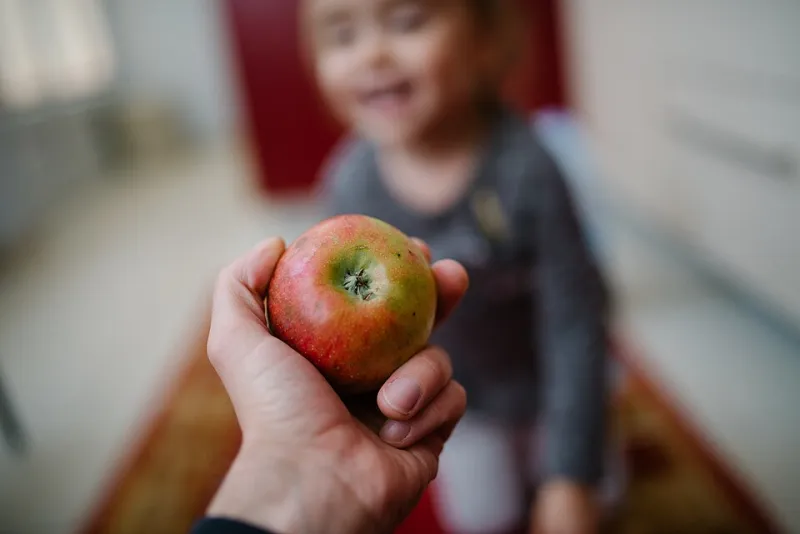
Photo: Shixart1985, CC BY 2.0, via Wikimedia Commons
An apple that turns brown before breaktime is not a lunchbox failure. It is a tiny chemistry demonstration asking to be noticed. At Lowerhouse Science, we like investigations that begin with something families already see every day — and this one needs little more than an apple, a few small pots and a willingness to argue politely about evidence.
Why a cut apple changes colour
Inside an apple, certain enzymes and the compounds they act on are kept in separate compartments. Slice the fruit and you break those compartments open. Oxygen from the air then joins the party, the enzymes get to work, and the pale flesh gradually darkens. This process is called oxidation. It is the same broad idea that turns a peeled potato grey or a bruised banana squidgy and dark.
The change is not dirt, and it is not a sign that the apple has suddenly gone off. It is a reaction between fruit tissue and oxygen. The interesting question for a lunchbox scientist is not really ‘why does it brown?’ but ‘can we slow it down, and how would we know?’
The lunchbox question
Imagine four slices from the same apple. One is left open to the air. One is brushed with lemon juice. One is dipped in salty water. One is wrapped tightly in cling film. Which slice stays palest for longest?
That is a fair-test question, and it is perfect for a kitchen-table investigation. Pupils can make a prediction, set up the samples, check them at several points during the day and report back with observations rather than guesses. Parents can help with the knife and the labelling; children can own the predictions, the timing and the evidence.
What you need
- One firm apple, ideally a variety everyone in the house will actually eat
- A sharp knife and a chopping board, used by an adult
- Four small bowls, ramekins or reusable lunchbox compartments
- Lemon juice, salty water and cling film
- Sticky labels and a pencil
- A timer or clock
- A simple colour scale, such as 1 for pale and 5 for very brown
- A phone or tablet for photographs, if you want a visual record
Keep the salty water mild — a teaspoon of salt in a small cup of water is plenty. The samples are for observation, not for eating afterwards, so discard them once the trial is finished.
Set up a fair test
Cut four slices from the same apple, aiming for similar thickness. Place each slice in its own labelled container. Label them clearly: A for plain air, B for lemon juice, C for salty water and D for cling film.
Keep everything the same except the thing you are testing. That means the slices should spend the same amount of time in the same room, at roughly the same temperature. If one slice sits by a sunny window and another goes in a cool cupboard, the comparison is muddled.
For slice B, coat it with lemon juice for about thirty seconds. For slice C, do the same with the salty water. Try to use a similar amount of liquid on each. Slice A gets nothing — it is your control, the slice that shows what happens without a treatment. Slice D gets wrapped tightly in cling film, with as little trapped air as possible.
Then start the clock. Record observations at the beginning, after an hour, at breaktime or lunchtime, and again at home time. If your school day makes that awkward, simply choose three or four checkpoints and stick to them.
What to look for
Use your colour scale and write a short note for each slice. Is the flesh pale, slightly tan or distinctly brown? Is the browning even, or patchy around the edges? Does the cling-filmed slice look different underneath the film? Take a photo from the same angle each time, if you can, so the evidence is easier to compare.
A results table might look like this:
| Time | Plain air | Lemon juice | Salty water | Cling film |
|---|---|---|---|---|
| Start | 1 | 1 | 1 | 1 |
| 1 hour | 2 | 1 | 1 | 1 |
| Lunchtime | 3 | 2 | 2 | 1 |
| Home time | 4 | 2 | 3 | 2 |
The numbers are only an example. Your apple may behave differently. That is not a problem — it is the point. A good investigation reports what actually happened, not what the internet said should happen.
Turning observations into a claim
Once the trial is over, ask three questions. Which slice stayed palest for longest? Which treatment seemed to make the least difference? And how sure are you, based on what you actually saw?
Lemon juice often appears to slow browning because its acidity affects the enzymes involved. Cling film can help by reducing contact with oxygen. Salty water may have some effect too, but children should be encouraged to look at their own evidence rather than declare a winner in advance. If two slices look similar, say so. If one result is surprising, repeat the trial with a fresh apple on another day.
This is also a neat way to talk about variables. The type of apple, the slice thickness, the room temperature and the amount of liquid should stay the same. The treatment is the thing that changes. That single idea sits underneath a great deal of school science, from plant growth trials to playground sound surveys.
A lunchbox lab with a purpose
Back at school, pupils can bring in their colour scales, photographs or short written reports. A class can pool results and ask whether everyone’s lemon juice sample behaved the same way. Did the cling film slice win in every kitchen? Did the salty water slice brown at the edges first? What might explain the differences?
That is genuine classroom news: not a finished fact copied down, but a small piece of evidence gathered by children and compared with others. It also gives parents a low-stress science conversation at the school gate. Instead of asking what happened in science today, you can ask which apple slice stayed palest — and why they think so.