Conkers, Calipers and Clean Data: A Lowerhouse Fair-Test Field Guide
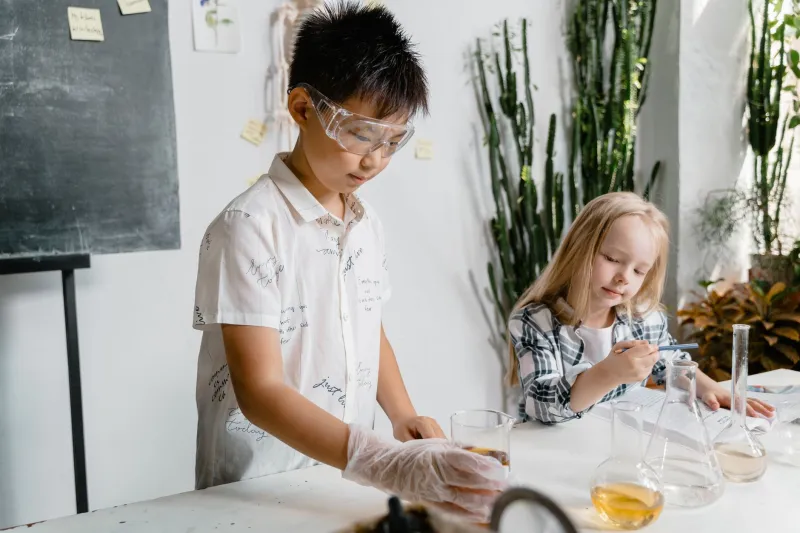
Autumn is conker season. The playground fills with shiny brown seeds, the pockets of every willing adult get heavier, and somebody always claims to have found the hardest conker in Lowerhouse. It is the perfect excuse for a science lesson that feels like a game.
This guide turns the Great Lowerhouse Conker Championship into a fair-test investigation. It is evergreen, so use it whenever conkers are ready. The aim is simple: keep the fun, but add measurement, fair rules, and a results table that KS2 pupils can actually use.
Start with a question
A good investigation begins with a question that can be tested. Try one of these:
- Which conker in our collection is hardest to crack?
- Does a heavier conker survive more drops?
- Do thicker shells make a conker tougher?
- Which conker wins when we use the same fair rules for every trial?
Pick one question. Do not test everything at once. A fair test changes one thing, measures one thing, and keeps the rest the same.
The three measurements
1. Mass
Mass is the easiest measurement to get right. Use a digital kitchen scale that measures to 0.1 g. Label each conker with a number using a pencil or a small sticker. Weigh each one and record the result in grams. Do not assume the biggest conker is the heaviest; children are often surprised by this.
2. Shell thickness
Shell thickness is tricky because you cannot measure it without damaging the conker. Keep this as a separate, adult-led side investigation. Use a few spare conkers that are not taking part in the championship. An adult can carefully cut a thin slice with a kitchen knife on a chopping board, then measure the shell with a ruler or calipers. Keep all cutting away from children, and never eat conkers.
If you do not want to cut any conkers, treat shell thickness as a teacher demonstration rather than a pupil measurement. The main championship can still use mass and hardness.
3. Hardness
Hardness is where the fun and the fair-test rules meet. Use a drop test. Mark one end of each conker so the same end faces down each time. Hold the conker at 30 cm above the same hard floor tile. Drop it, then inspect it. Record how many drops it survives before a crack appears. Stop at the first crack.
This is not a perfect measure of toughness, because conkers are natural objects with uneven shells. That is exactly why fair rules matter. Same height, same surface, same inspection method, same person dropping, and the same number of trials where possible.
Fair rules for the championship
- Number every conker before the contest begins.
- Use the same drop height for every conker, such as 30 cm.
- Use the same hard surface, such as a floor tile or a wooden board.
- Drop the same end of the conker each time.
- Use the same person to drop and inspect the conkers.
- Do not soak, bake, or treat conkers unless that is a separate investigation with its own fair rules.
- Keep the championship batch and the cutting batch separate.
- Record the first crack, not the final smash.
- Repeat the test with a second batch if you have enough conkers.
If pupils want to test whether soaking makes a difference, that is a different question. It needs its own controlled set-up: same soaking time, same water volume, same drying time, and the same drop test. Do not mix it into the main championship.
A simple results table
| Conker number | Mass in g | Drops survived | Cracked? | Notes |
|---|---|---|---|---|
| 1 | ||||
| 2 | ||||
| 3 |
For a class, add columns for circumference if you want extra measuring practice. Use a piece of string and a ruler to measure around the middle of each conker. That gives pupils another number to compare, but keep the main question clear.
Data handling for KS2
Once the table is full, pupils can calculate the mean number of drops survived and the range. A bar chart of drops survived per conker works well. A scatter graph of mass against drops survived is a good stretch for older pupils, but do not force it if the class is not ready.
Ask pupils to describe what they see before explaining it. For example: The heavier conkers did not always survive longer. The range was large, so one trial may not be enough. We controlled the drop height, but we could not control the shape of the shell.
That last point is valuable. Real science often involves messy natural objects. Good scientists say what they controlled, what they could not control, and what they would change next time.
Safety and conker check
Horse chestnuts are not for eating. They contain a substance that can make people ill, so keep them away from mouths and young children. Wash hands after handling conkers, especially before snacks. Check that pupils are not allergic to anything on the surface, and avoid picking conkers from areas where dogs may have been.
When cutting conkers for shell thickness, adults should use a stable chopping board and a sharp knife, away from children. Never let pupils use the knife.
A ready-made 45-minute lesson
- Five minutes: introduce the question and the idea of a fair test.
- Ten minutes: number, weigh, and measure the conkers.
- Ten minutes: demonstrate the drop test and agree the rules.
- Fifteen minutes: run the championship in small groups, with one recorder per group.
- Five minutes: pool the results and discuss patterns, surprises, and improvements.
The Great Lowerhouse Conker Championship does not need a prize to be worthwhile. The winning conker is fun, but the real winner is a class that can set fair rules, record clean data, and explain what they found. That is a proper autumn science result.