Smoke, Soot and Strontium: Lowerhouse’s Post-Bonfire Air Check
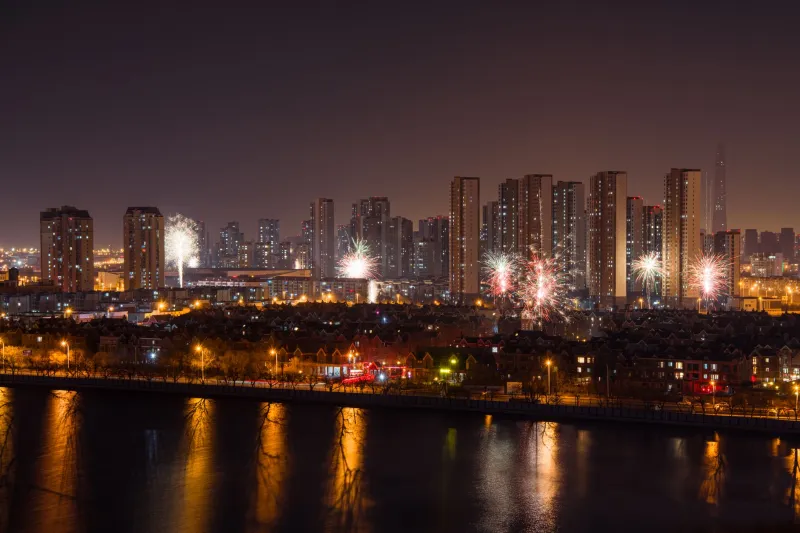
By 8 November 2026, the bangs and whizzes of Bonfire Night have mostly faded. The rockets are packed away, the last toffee apple has been eaten, and the park is back to its usual muddy self. But if you walked past a bonfire site this week, you may have noticed something else: a faint smoky smell, a grey smudge on a windowsill, or a haze hanging over the rooftops after dark.
That is the after-party. Fireworks are brilliant fun, but they do leave things behind in the air. None of this is a reason to panic. It is a good reason to look closely, ask questions, and think about how we keep the air around homes and schools as clean as we can.
What is actually left in the air?
Fireworks are not just pretty lights. They are small chemical packages that burn fast and hot. When they go off, they release gases and tiny solid particles. Some of those particles are so small that they can float for hours and travel much further than the end of your street. You might see them as smoke. You might smell them as that sharp, bonfire-ish tang. You might find them later as soot: the dark, dusty stuff that settles on outdoor surfaces.
Soot is mostly carbon, but it can mix with other bits and pieces from the firework, the bonfire, and even the air itself. It is not something to handle. Think of it as a sign that something has been burning, not as a toy or a craft material.
Weather matters a lot here. A windy night spreads smoke quickly. A still, damp night can trap it close to the ground. Rain can wash some particles out of the air, but it can also leave marks on cars, garden furniture, and playground equipment. By the week after Bonfire Night, most of the visible smoke has usually gone, but a few clues can remain.
Why fireworks are colourful
The colours are the science bit that children love most. Fireworks get their colours from metal salts. When these compounds get hot, their atoms release energy as light. Different metals release different colours.
- Strontium salts usually give red.
- Barium salts often give green.
- Copper salts can give blue.
- Sodium salts give a strong yellow.
- Calcium salts can give orange.
- Potassium salts can give lilac or purple.
These are not the same as table salt, and they are not for tasting or touching. They are chemical compounds chosen by firework makers because they glow brightly when heated. The next time you see a firework display, you can play a guessing game: which metal made that colour? It is a neat link between chemistry and the night sky.
A safe family soot check
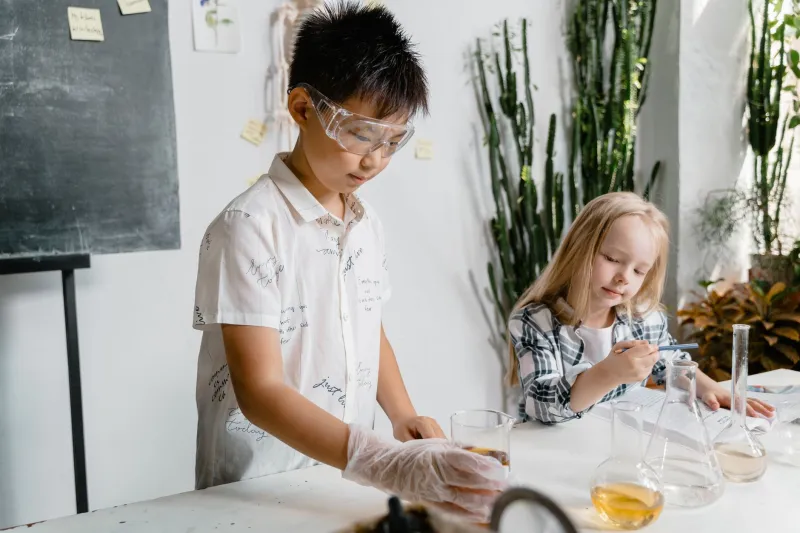
You do not need special equipment to notice what fireworks leave behind. A simple observation activity works well for curious KS2 pupils, as long as an adult keeps things safe.
The white-paper test
- Place a clean white sheet of paper or a white plastic plate on an outdoor table or windowsill where it will not blow away. Keep it out of reach of pets and younger children.
- Leave it for a day or two, ideally after a dry night. Put a second sheet indoors as a comparison.
- Look, do not touch. Use a magnifying glass if you have one. Are there dark specks? Dust? Nothing obvious?
- Take a photo instead of collecting the soot. If you do handle the paper, wash your hands afterwards.
- Compare the outdoor and indoor sheets. What is different? What might explain it?
This is not a precise air-quality monitor. It is a noticing activity. It helps children connect a familiar event, Bonfire Night, with a bigger idea: the air is a shared space, and what we put into it does not vanish instantly.
Clean air around school
Lowerhouse families might spot soot on playground benches, car roofs, or garden toys. It is a useful prompt for a calm conversation about clean air near schools. Idling car engines outside the school gate, smoky bonfires, and wood burners can all add particles to the local air. Nobody needs to point fingers. Small choices, like switching off an engine while waiting, can make a difference over time.
It is also worth saying clearly that air quality usually recovers quickly, especially with wind and rain. One bonfire night does not make the air permanently dirty. The point is to notice, understand, and make sensible choices together.
KS2 talking points
- What is the difference between smoke and steam?
- Why do fireworks make different colours?
- How could we find out if soot is on a surface without touching it?
- Why might rain change what we see on a windowsill?
- Why could idling cars outside a school matter for the air children breathe?
- What would make our soot test fairer if we repeated it?
A week after Bonfire Night is a good time to look again. The sparks have gone, but the science has not. A smudge on a white plate can lead to a proper conversation about particles, weather, colour, and the air we share.