Watts Behind the Window: A Lowerhouse Family’s Advent Guide to Festive Lights
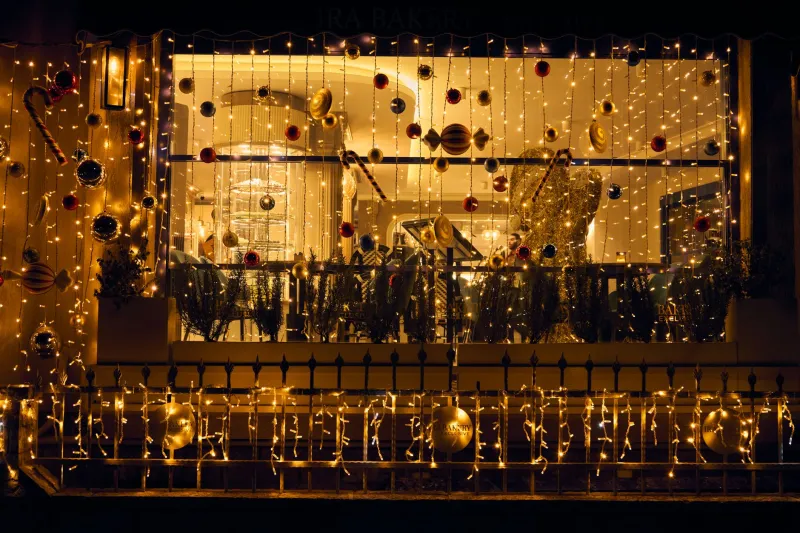
December is creeping up on Lowerhouse, and with it comes the annual ritual of untangling the fairy lights. Before the tinsel goes up, there is a quietly useful science lesson hiding in that box of bulbs. It involves watts, kilowatt-hours and the very ordinary question of how much energy it takes to make a window twinkle.
This is not a lecture about turning everything off and sitting in the dark. It is a family-friendly watt-watch: a way for pupils to estimate, compare and track festive lighting at home, then bring what they notice back to class.
Why a watt-watch makes sense in an ordinary home
A watt is a rate. It tells you how quickly something uses electrical energy, a bit like litres per minute from a tap. A kilowatt-hour is an amount: 1,000 watts used for one hour. Your household energy bill is built from kilowatt-hours, usually shortened to kWh.
The lovely thing about fairy lights is that they are a small, visible example. Pupils can read a label, count a few bulbs, estimate how long the lights are on and do a little arithmetic. No laboratory needed. A kitchen table, a pencil and an adult to check the plug are enough.
The simple maths behind the sparkle
Start with the label on the light set or its power supply. Look for a number followed by W. A small LED set might say 4W or 6W. An older incandescent set might say 20W, 40W or more.
To estimate energy use, use this friendly formula:
- Energy in kWh = watts × hours used ÷ 1,000
So a 5W LED string left on for six hours uses about 0.03 kWh. A 40W incandescent string on for the same six hours uses about 0.24 kWh. That is a difference of 0.21 kWh in a single evening. Over 30 evenings, the gap is roughly 6.3 kWh. Multiply by your own unit rate from a recent energy bill if you want a money estimate, but keep the focus on the comparison rather than the exact cost.
The numbers do not need to be perfect. The point is to see that power and time both matter. A low-wattage set left on all night can still add up, and a higher-wattage set used briefly may be less dramatic than it looks.
LED versus incandescent: what pupils should look for
Older incandescent fairy lights make light by heating a thin wire until it glows. That is why they can feel warm and why much of the energy becomes heat rather than light. LEDs work differently and are usually much more efficient. They often feel cooler and use fewer watts for a similar decorative effect.
Pupils can compare sets by checking three things:
- The wattage on the label or plug-in power supply.
- The number of bulbs in the set.
- Whether the bulbs are LED or traditional.
Do not judge by brightness alone. A bright set is not automatically a hungry one. Also remember that the label figure may be a maximum. Some sets have several modes, and flashing or dimmed settings can change actual use. For a home estimate, the label plus a sensible guess at hours is plenty.
If a family has a plug-in energy meter, an adult can use it to check a set safely. It can be a fascinating little device: plug the meter into the socket, plug the lights into the meter, and read the wattage. But it is an adult job, and only with cables and plugs in good condition.
A week of kilowatt-hours at home
Choose one light set for the Lowerhouse Advent Watt-Watch. Do not try to audit the whole house. One set keeps the task manageable and the science clear.
A simple week looks like this:
- Day 1: With an adult, find the wattage. Write it down.
- Days 2 to 7: Estimate how many hours the set is on each evening. A timer plug can help, or just note the switch-on and switch-off times.
- Each day: Multiply watts by hours, then divide by 1,000. Add the daily figures together for a weekly kWh total.
Pupils can make a small table with columns for day, hours, calculation and kWh. Younger children might colour in a bar for each hour instead. The important part is the habit of noticing, not a perfect spreadsheet.
The Lowerhouse switch-off challenge
Here is the friendly challenge for families: can you make your festive lights a little more thoughtful without making December any less magical?
Pick one or two ideas:
- Switch the lights off at the socket before bed rather than leaving them on all night.
- Use a timer so the lights come on at dusk and go off at a sensible hour.
- Choose one focal set for the evening rather than every set in the house at once.
- Compare an old set with a newer LED set and talk about the wattage difference.
- Keep outdoor lights for outdoor use and check that they are suitable for the weather.
The challenge is not a competition to have the lowest number in the street. It is a family science habit: look, estimate, decide, try again. A pupil who can explain why a 5W set and a 40W set behave differently has already done real physics.
Safety first, sparkle second
Festive lights are electrical equipment, so adults should lead the checking. Look for frayed cables, cracked plugs, damaged bulbs and signs of overheating. Do not overload sockets or daisy-chain extension leads unnecessarily. Use a residual current device, often called an RCD, for outdoor lights and follow the manufacturer’s instructions. Unplug before changing bulbs or checking a set, and never let children handle mains-powered lights unsupervised.
What to bring back to class
Lowerhouse pupils can bring one number, one observation or one question back to school after the watt-watch. Perhaps the LED set used far less than expected. Perhaps the old set was surprisingly hungry. Perhaps the family forgot to switch off on three nights and the tally showed it.
Those small findings make a good classroom display: a simple bar chart of estimated weekly kWh, a labelled plug, a safety checklist or a pledge card for the switch-off challenge. The science of electrical power becomes less abstract when it is tied to a window, a timer and a string of lights that someone in the family actually has to untangle.
December can still be bright. A Lowerhouse watt-watch simply asks families to notice what is behind the glow.