Pearl Paths and Pocket Thermometers: Lowerhouse’s November Ice Patrol
On 9 November 2026, the first proper nip is in the air. At Lowerhouse, that means grit bins appear, the caretaking team gets busy with the spreader, and the walk to the gate can turn into a careful shuffle. Gritting looks simple: scatter salt, wait, walk. But there is a neat bit of science in every crunchy step — and a useful investigation hiding in an ice-cube tray.
This month, Lowerhouse Science is inviting classes and families to run a small winter gritting audit. Not to grade anybody’s work, and not to turn the playground into a laboratory (though a clipboard helps). The aim is to notice where ice forms, understand why salt behaves the way it does, and say a proper thank you to the people who make the morning route safer before most of us have found our other glove.
Why Salt Works — Until It Doesn’t
Rock salt lowers the freezing point of water. Pure water freezes at 0°C. Add salt and the water needs a lower temperature before it turns solid. That is why a salty puddle can stay slushy on a frosty morning while a clean puddle has gone glassy. The salt dissolves into the thin film of water on the ice, making brine, and the brine has a lower freezing point than plain water.
But salt is not a magic wand. It works best when there is a little moisture, some movement to help it spread, and temperatures that are not too far below freezing. On a properly bitter morning, grit can sit on top of hard ice looking helpful while doing very little. It can also be washed away by rain before the temperature drops. This is why the caretaking team’s timing matters: pre-salting before a forecast frost is often more effective than a panicked scatter after the path has already turned pearly.
There is a safety point too. Grit is a tool, not play sand. It should not go in mouths, eyes or pockets, and families should wash hands after handling it. Dogs’ paws can also be irritated by salt, so a rinse after a winter walk is kind.
The Ice-Tray Fair Test
Here is a classroom-ready investigation that needs very little kit. You will need: an ice-cube tray, water, table salt, coarse rock salt if you have it, a thermometer, a timer, and a notebook. If coarse rock salt is not available, table salt will do; the point is to compare, not to recreate a council depot.
Fill the ice-cube tray with the same amount of water in each compartment. Freeze overnight. Next morning, label the compartments: one control with no salt, one with a pinch of table salt, one with a larger pinch, and one with coarse rock salt if available. Keep the amounts and the timing the same for every cube you are comparing. Place the tray somewhere cool but not freezing, or take readings quickly in the classroom. Record the temperature, then check every few minutes: which cube melts first? Which leaves the most slush? Does the coarse salt behave differently from the fine salt?
The fair-test rules are the usual ones. Change only what you are testing, keep everything else the same, and repeat the test if you can. A second tray on another day makes the results more trustworthy. Pupils can draw a simple bar chart of melting times, or write a sentence beginning: ‘We think the coarse salt worked faster because...’ The best answers will include a ‘because’, even if the because turns out to be wrong.
Mapping the Slipperiest Spots
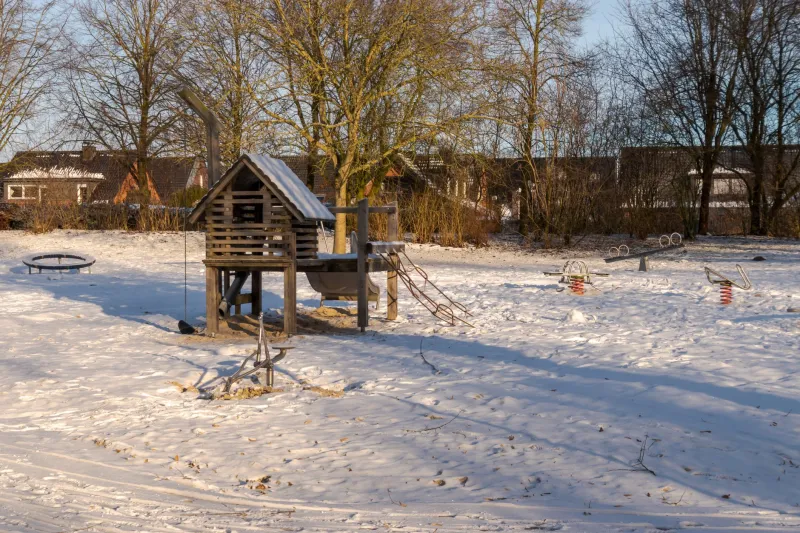
Science does not have to stay in the tray. With a teacher or parent, pupils can make a simple map of the school grounds and mark the places where ice tends to linger. The gate hinge, the shaded path by the hedge, the corner where the drain blocks, the bike rack, the step outside the hall: these are the usual suspects. A short observation at drop-off, with everyone in sensible shoes and no running, can turn into a brilliant discussion about shade, drainage and footfall.
Families can help too. If you notice a genuinely icy patch on the route to school, tell the school office so it can be checked. Please do not assume someone else has seen it. A quick message with the location and the time is enough. This is not about blame; it is about building a better map of the morning.
A Caretaker’s Route Is a Science Route
The caretaking team’s gritting route is a practical piece of applied science. They watch forecasts, check the bins, fill the spreader, and decide where to start. A good route usually begins with the busiest paths and the steepest bits, then moves to the quieter corners. Pre-salting before a frost, clearing leaves from drains, and keeping grit bins topped up are all part of the same job.
So this month, Lowerhouse Science would like to celebrate that route. Pupils could write a short thank-you note, draw a labelled map of the gritting route, or interview a member of the caretaking team about how they decide when to grit. The best questions are simple: ‘Which bit freezes first?’ ‘How do you know when to start?’ ‘What is the most annoying part of the job?’ The answers will probably be more interesting than any worksheet.
Practical Winter Morning Tips
- Leave five extra minutes. Rushing is the enemy of safe feet.
- Choose shoes with grip, not just warmth. Wellies are brilliant for wet, less so on polished ice.
- Walk like a penguin: short steps, feet slightly turned out, hands out of pockets for balance.
- Use handrails where they exist, and keep to the gritted route even if it is longer.
- Check school communications before setting off if the weather has been severe.
- Keep grit out of eyes, mouths and pockets, and wash hands after handling it.
- Rinse dogs’ paws after walks if they have been on salted pavements.
Community Notice: Help Us Map the Pearl Patches
Between now and the end of November 2026, Lowerhouse families are invited to report icy patches on the route to school to the school office. Include the location, the time and whether it was on the pavement, the gate or the playground. Pupils will turn the reports into a simple display map, and the caretaking team will use it to check the gritting route. We will also be collecting thank-you notes for the team who fill the bins and spread the grit before the first bell. If you see them out with the spreader, a wave and a ‘thank you’ is a perfectly good piece of community science.
The walk to school will still be chilly. There will still be the occasional slide that looks more dramatic than it is. But with a tray of ice cubes, a thermometer and a bit of careful noticing, the humble grit bin becomes a lesson in freezing points, fair tests and looking after one another. And that is a pretty good way to start a November morning at Lowerhouse.