Shadows That Stretch: A Lowerhouse Solstice Measuring Plan for 2026
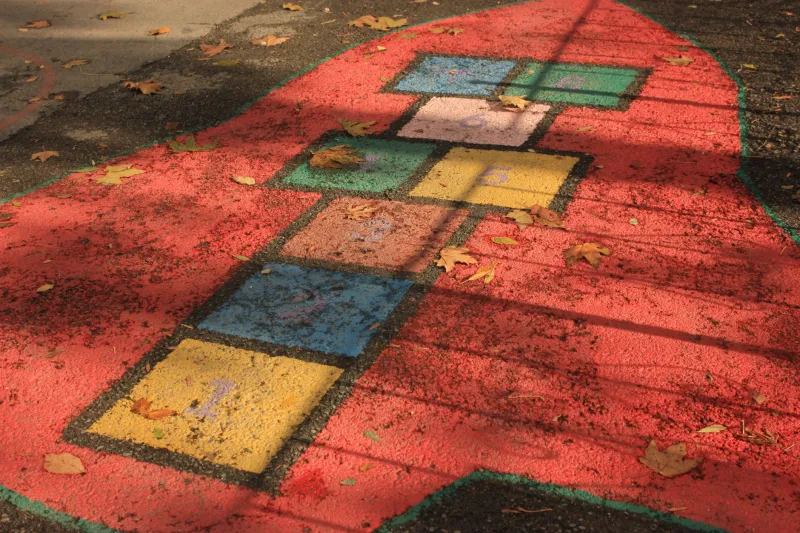
On a bright November morning at Lowerhouse, the playground looks as if someone has stretched the world sideways. Goalposts cast long stripes across the tarmac, and the trees throw shadows far beyond their usual reach. That is a good day to start The Long Shadow Project: a simple, weekly measurement challenge for pupils and families running from now until the shortest day on 21 December 2026.
The idea is not to build a perfect scientific instrument. It is to notice a pattern. Pick one upright object, measure its shadow at the same time each week, write the result down and turn the numbers into a class graph. Along the way, you can make a paper-plate sundial and find out why winter light behaves the way it does.
Why winter shadows stretch
The Earth is tilted on its axis by about 23.5 degrees. As the year turns, the UK leans away from the Sun in winter and towards it in summer. In November and December, the Sun sits lower in the sky, even at midday. A low Sun sends light across the ground at a shallow angle, so an upright object blocks more of it and casts a longer shadow.
The shortest day is not the start of winter in every sense, and it is certainly not the coldest day by default. It is simply the day with the least daylight in the northern hemisphere. After 21 December 2026, the days begin to lengthen again, slowly at first. The shadow project is a way of seeing that turning point with your own eyes, rather than just reading about it.
Choose a post and keep it fair
A fair test means changing only what you intend to change. In this case, the thing that changes is the date. Everything else should stay as similar as possible.
Choose a fixed upright object in the school grounds or a local park. A netball post, a signpost, a flagpole or a straight fence post all work. Avoid anything that moves, bends or gets moved by other people. Measure from the base of the object to the tip of its shadow. Use a tape measure, a long string with knots, or a trundle wheel if your school has one. A piece of chalk can mark the shadow tip on tarmac, but check with an adult first.
Record your reading at the same time each week. Lunchtime is convenient, but the exact hour matters less than keeping it consistent. Note the date, the object, the shadow length in centimetres or metres, the cloud cover and anything unusual. If the Sun is hidden, write 'no reading' rather than guessing. A missing point is better than a made-up one.
Make a simple sundial
A sundial is just a shadow clock. You can make a basic one with a paper plate, a pencil, a blob of sticky tack and a sunny windowsill or playground bench.
Push the pencil upright through the middle of the plate and secure it with sticky tack. On a sunny day, take the plate outside at 9am, 10am, 11am, midday, 1pm, 2pm and 3pm. At each hour, mark where the pencil's shadow falls and write the time next to the mark. Keep the plate in the same place all day. On another sunny day, you can check whether the shadow reaches roughly the same marks at the same times.
This is not a precision timepiece, and British Summer Time can confuse things if you try it across the year. For a school project, that is fine. The point is to see that the Sun's apparent movement is regular, and that a shadow can carry information.
From playground to graph
Back in class, put the weekly readings into a table. The date goes in one column, the shadow length in another, and your notes in a third. Then plot a line graph with dates along the bottom and shadow length up the side. Use the same scale each week so the graph tells a fair story.
You might see the shadow lengthen gradually as December approaches, then begin to shorten after the solstice. You might also see bumps caused by cloudy weather, a different measuring angle or a wobbly tape measure. Do not hide those bumps. Annotate them. They are part of the investigation.
Safety and honest data
Never look directly at the Sun, even through sunglasses or a telescope. Measure with your back to the Sun and keep tapes tidy so nobody trips. If you are working on tarmac, use cones or ask an adult to help with traffic. And keep the record honest: if the shadow is blurry, say so; if someone bumps the post, start again next week.
The Long Shadow Project is a small ritual with a big idea behind it. Week by week, a line on a graph becomes a picture of the Earth leaning through space. That is quite a lot from a playground post and a piece of string.